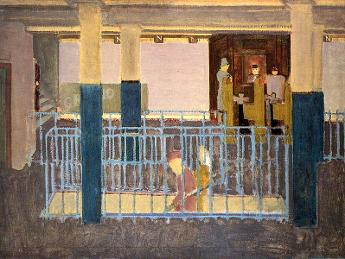
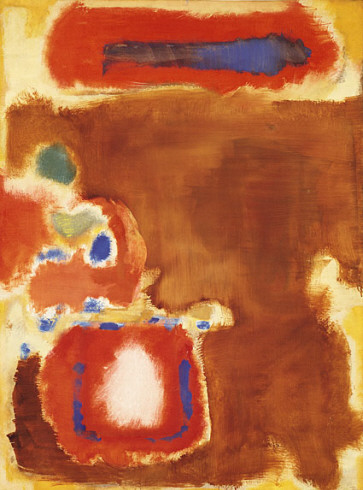
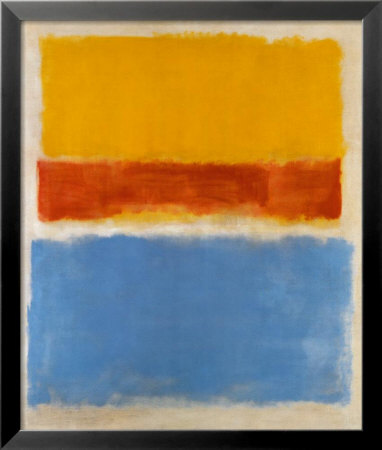
Styles of Art Among the abstract expressionist artists, Mark Rothko was the one who had made an impact in the artistic movement. Rothko’s artistic style had begun as Cezanne as he was influenced by it. During the early 1930s, he made paintings mostly scenes from life, but they were never direct representations of what he saw. He tried to emphasize the emotional aspect of his work, sometimes altering the visual plane or using unnatural colors, techniques pioneered by the expressionists. By the early 1940s, Rothko’s style had moved away from images of life and into symbolic works reflecting the angst of a nation only just emerged from the Depression only to be plunged into a world war. This style was distinguished by the use of themes from mythology, simple shapes, and images inspired by primitive art. It was during the late 1940s, in which his mature style developed. Drawing on surrealism’s fascination with the floating image, and combining it with a pure abstraction, he began placing rectangles of color on the canvas. By 1950 however, Rothko had reduced the amount of rectangles that he would use and place them vertically on a colored background. Later on, he developed the so-called “color field” technique, where his artworks were now thoughtful and abstract. He suggested emotion purely through the use of color, but not form. Then, he practiced giving his paintings numbers rather than names or simple descriptive titles or no titles at all. Rothko stated that this allowed the work to speak for itself or to allow viewers to experience the work for themselves without the artist being there. He wanted the viewers to find the “tragedy” in his paintings. Rothko’s styles of painting would change, but only because he would experiment with a variety of techniques. |
||||
 |
 |
 |
||
